
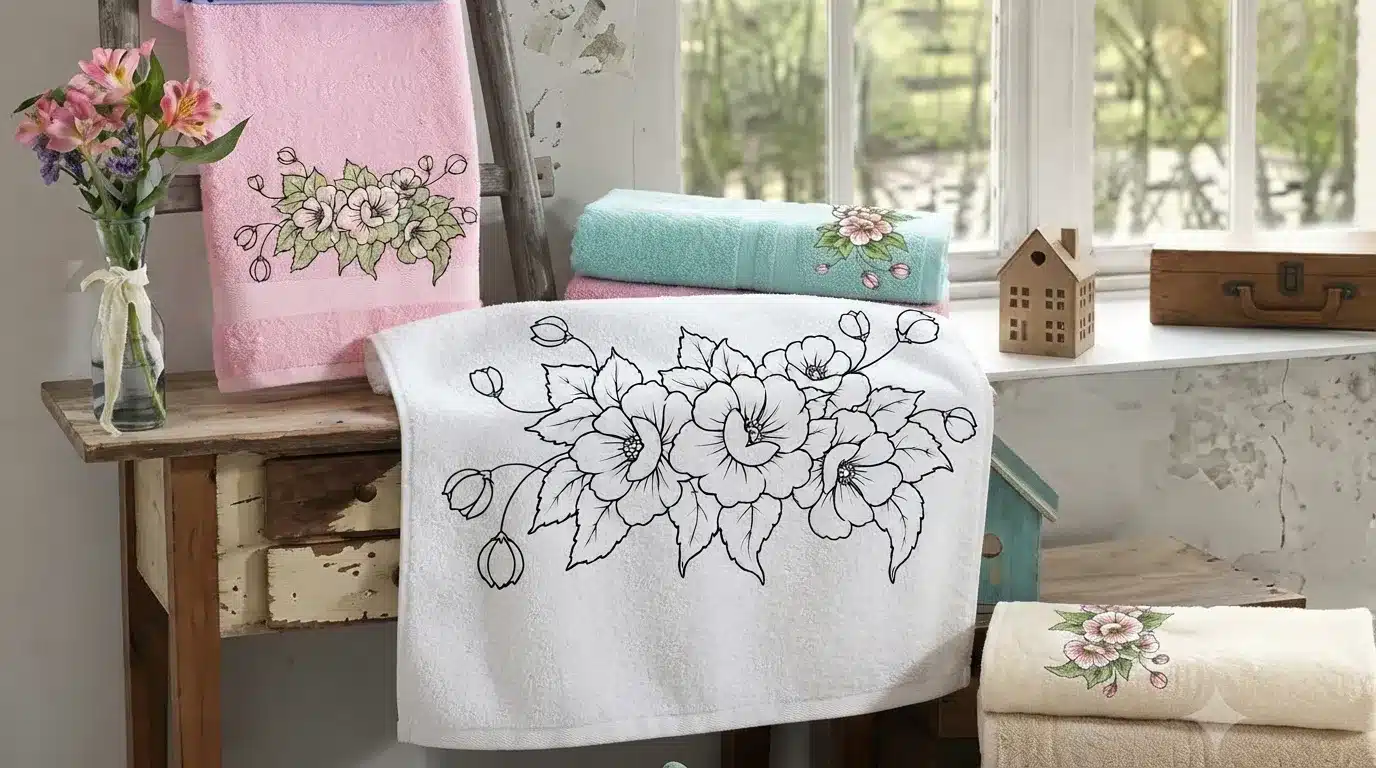
100 Flower Templates for Fabric Painting: Print-Ready Outlines and a Complete Guide
If you like different souvenirs Whether you want to surprise your guests or give a gift, hand-painted items are more than just a little souvenir, They are works of art that people take home. And for the artisan to create these paintings, the Flower molds They are some of the key materials for transforming a simple piece of fabric into art.
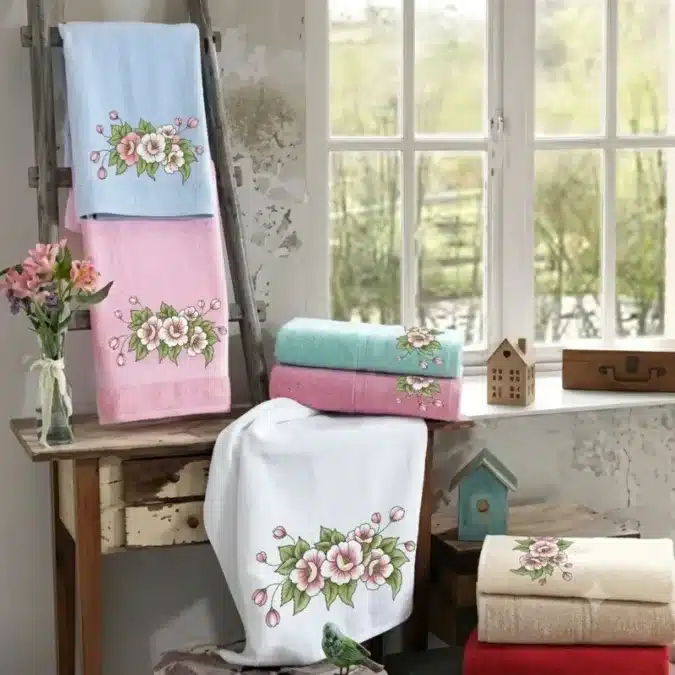
In this post, you'll find a complete guide to flower motifs for fabric painting, tips for beginners, ideas for arrangements featuring branches and wildflowers, and at the end, you'll be able to download it for free 100 Flower Templates in PDF, ready to print and use in your projects.
What are flower stencils for fabric painting?
In fabric painting, the “template” and the “outline” are the same thing: It’s the drawing that serves as the basis for tracing or transferring the image onto the fabric before painting. It is this outline that guides the brush and ensures that the petals, leaves, and stems are symmetrical and properly positioned.

Having a good collection of stencils is what makes the difference between a piece that looks professional and a poorly proportioned painting. That’s why ready-made, tested, and well-sized stencils are so sought after by those who work in or practice this type of craft.
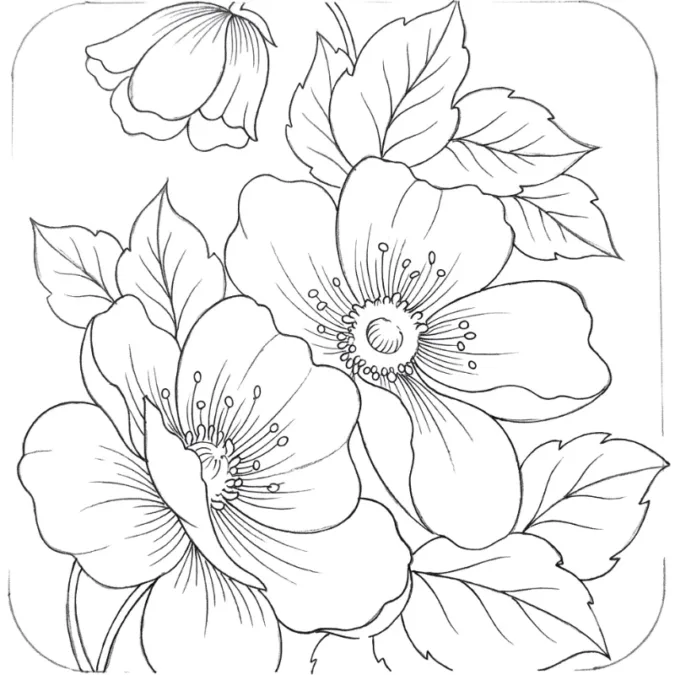
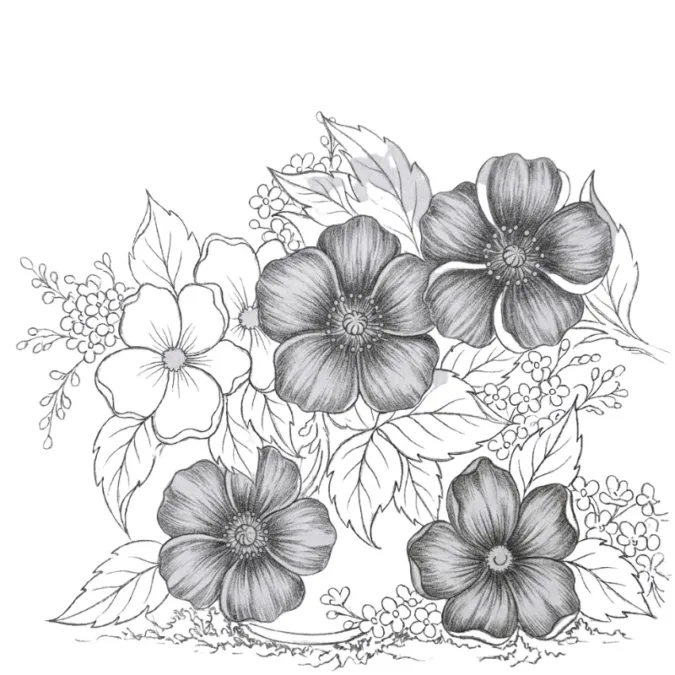
Simple Flower Fabric Painting
Not every painting has to be elaborate to be beautiful. Simple flowers, with just a few petals and clean outlines, are great for:
- Those who are learning to control the brush and the dilution of the paint;
- Everyday items, such as dish towels and napkins;
- Patterns that will be repeated several times on the same fabric, such as a row of flowers.
The secret to simple flowers lies in choosing just a few colors (two or three are enough) and taking care with the outlines. Daisies, five-petaled flowers, and stylized buds are the most common designs in this category, precisely because they’re quick to paint and look charming even without complex shading.
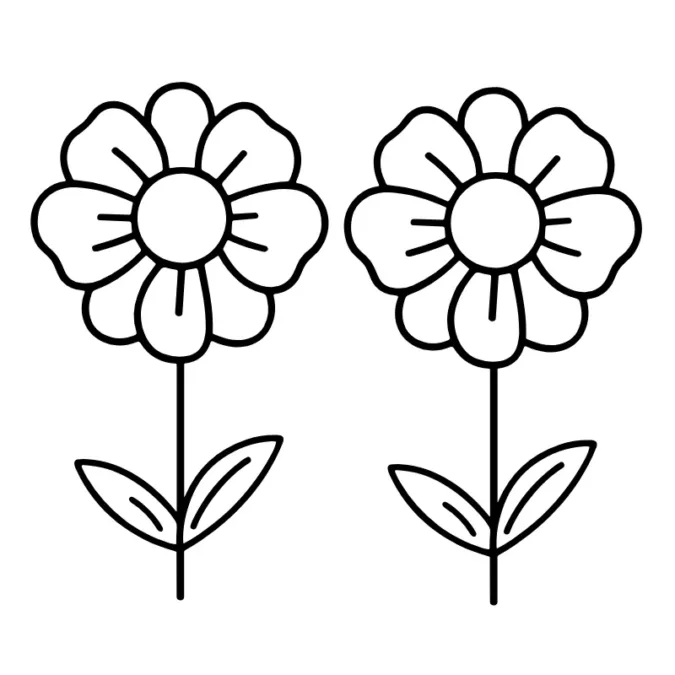
Flower patterns for fabric printing
When printing the guidelines, taking a few precautions can make all the difference in the final result:
- Use standard bond paper for the sketch and tracing paper or carbon paper if you're transferring it using carbon paper or light.
- Check the scale before printing. Many templates are designed to fit on a dish towel (approximately 38×58 cm) or a diaper (approximately 70×70 cm), so adjust the print size without distorting the flower’s proportions.
- Choose black-and-white printing, with clearly defined lines, to make it easier to see when tracing.
- Which printer to use: Use inkjet printer, preferably the Epson EcoTank
- Organize the patterns by theme or size in a folder—whether physical or digital—so you don't waste time looking for the right drawing in the middle of a project.
Having a good collection of print-ready line art saves a lot of time, especially for those who sell painted pieces and need to reproduce the same designs frequently.
Flower patterns for fabric painting: how to transfer them to the fabric
After printing the pattern, it's time to transfer it to the fabric. The most commonly used techniques are:
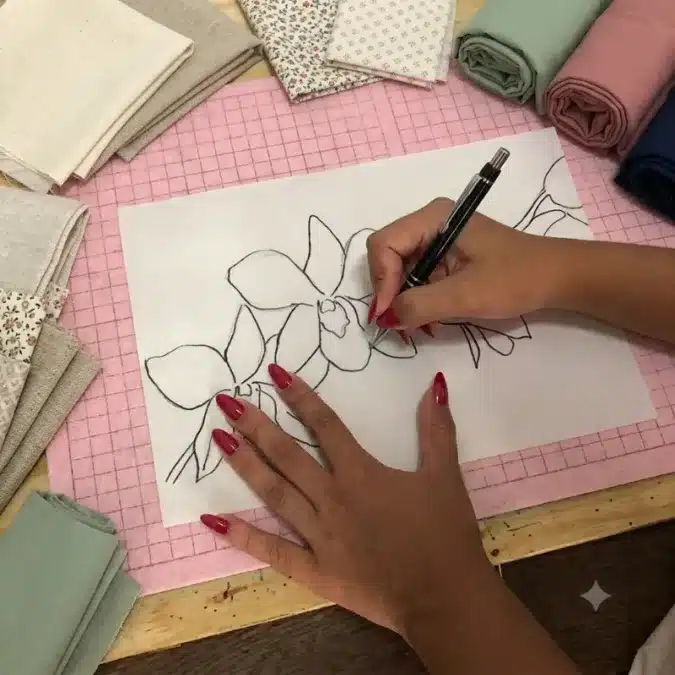
- Carbon paper: Place the carbon paper between the sketch and the fabric, and trace the outlines with a pen or pencil, being careful not to press too hard so as not to stain the fabric.
- Window decal or illuminated glass: Stick the tracing onto the glass, place the fabric on top, and trace the design, using the light shining from behind. This works very well on light-colored fabrics.
- Tracing paper suitable for painting on fabric: Found in craft stores, it has the advantage of coming out cleaner and not smudging.
Regardless of the technique you choose, it's best to secure the fabric firmly to a stable surface before you begin, so the design doesn't slip.
Have you ever thought about presenting your products in a more appealing and professional way? and thus add even more value to your products. Find out how to do it here Easy DIY Personalized Tote Bags at Home
Fabric Painting: Flowers for Beginners
If you're just getting started with fabric painting, here's a simple guide to help you get off on the right foot:
Basic materials:
- Cotton fabric (avoid fabrics with a high synthetic content at first);
- Fabric paints (matte or PVA-based);
- Brushes #4, #6, and #8 (round and flat);
- A palette or dish for mixing paints;
- A simple flower template and carbon paper.
Step by step:
- Wash and iron the fabric before painting to remove the starch and help the paint adhere better.
- Trace the template you've chosen.
- Start with the leaves and then move on to the petals, always working from the lightest colors to the darkest.
- Let it dry thoroughly between coats.
- Finish the outlines with a fine brush or fabric pen if you want them to stand out more.
- Set the paint by ironing the back of the fabric, following the paint manufacturer's instructions.
Starting with simple flowers and just a few elements helps you build confidence before moving on to more elaborate arrangements, such as bouquets and floral arrangements.
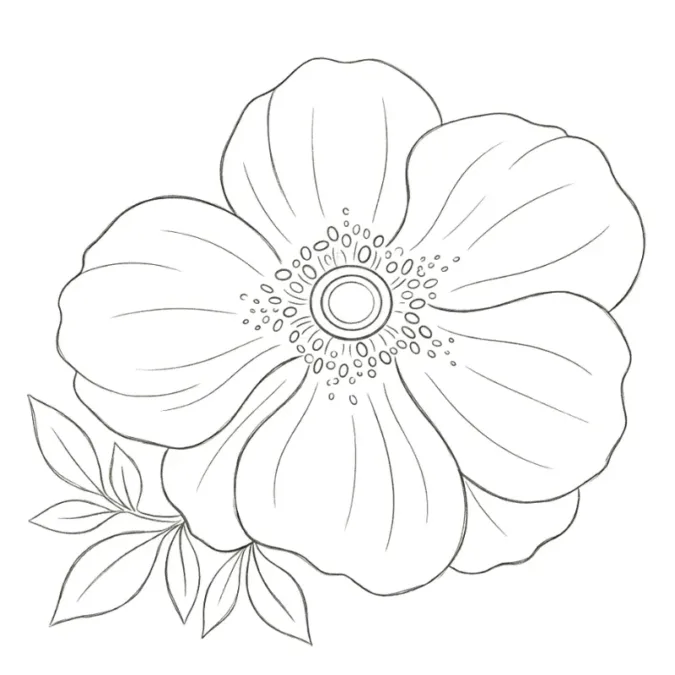
Fabric Painting: Wildflowers
Wildflowers are one of the most charming motifs in fabric painting because they lend a delicate and unpretentious feel, perfect for tablecloths, curtains, and bedding in a rustic or Provençal style.
This style usually goes well with:
- Small, irregular flowers, such as daisies, lavender, and stylized wildflowers;
- Looser lines, without excessive symmetry, imitating the natural look of a flower-filled field;
- A palette of soft colors, such as lilac, light yellow, sage green, and white.
One tip is to arrange the flowers in groups of different sizes, mixing closed buds with open flowers, to give the arrangement more movement and a more natural look.
Flower bouquets to paint on fabric
Flower arrangements, or bouquets, are compositions consisting of two or more flowers joined by a stem or a common base, usually combined with leaves. They are widely used in:
- Corners of towels and dishcloths;
- Pillow center;
- Decorative trims on baby layettes and bedding.
When arranging a bouquet, it's a good idea to follow some best practices for composition:
- Use an odd number of flowers (three or five), as this tends to look more balanced;
- Vary the size and angle of the flowers within the bouquet, avoiding exact repetition;
- Visually tie the whole arrangement together with a bow or ribbon—a classic touch that “ties the composition together.”.
Branches are also great for those who have already mastered simple flowers and want to move on to designs with more elements and depth.
Download 100 flower templates in PDF format—for free
To make life easier for painters and those who create custom pieces, we've put together a package that includes 100 Printable Flower Templates, including single flowers, branches, bouquets, and wildflowers, in various sizes.
That way, you'll always have a complete collection of patterns on hand so you won't get stuck when you start a new fabric painting project.
Conclusion
In this article, I’ve encouraged you to think beyond traditional personalized party favors, such as little boxes and digitally created designs. Fabric painting is also a unique, heartfelt option—a work of art that can serve as a party favor, a Father’s Day gift, or a Christmas present. And flower stencils are the essential tool that allows artisans to paint and create beautiful products.
Author




 Portuguese
  English
  Spanish